

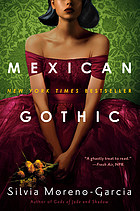
 Mexican Gothic
by
Mexican Gothic
by
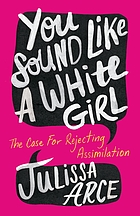 You Sound Like a White Girl
by
You Sound Like a White Girl
by
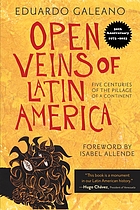 Open Veins of Latin America
by
Open Veins of Latin America
by
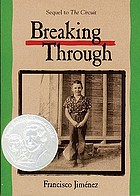 Breaking Through
by
Breaking Through
by
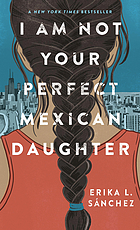 I Am Not Your Perfect Mexican Daughter
by
I Am Not Your Perfect Mexican Daughter
by
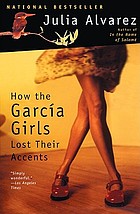 How the Garcia Girls Lost Their Accents
by
How the Garcia Girls Lost Their Accents
by
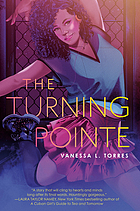 The Turning Pointe
by
The Turning Pointe
by
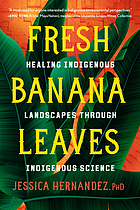 Fresh Banana Leaves: Healing Indigenous Landscapes through Indigenous Science
by
Although "holistic land, water, and forest management practices born from millennia of Indigenous knowledge systems have much to teach allof us, Indigenous science has long been ignored, otherized, or perceived as "soft"--the product of a systematic, centuries-long campaign of racism, colonialism, extractive capitalism, and delegitimization. Here, Jessica Hernandez--Maya Ch'orti' and Zapotec environmental scientist and founder of environmental agency Pina Soul--introduces and contextualizes Indigenous environmental knowledge and proposes a vision of land stewardship that heals rather than displaces, that generates rather than destroys."
Fresh Banana Leaves: Healing Indigenous Landscapes through Indigenous Science
by
Although "holistic land, water, and forest management practices born from millennia of Indigenous knowledge systems have much to teach allof us, Indigenous science has long been ignored, otherized, or perceived as "soft"--the product of a systematic, centuries-long campaign of racism, colonialism, extractive capitalism, and delegitimization. Here, Jessica Hernandez--Maya Ch'orti' and Zapotec environmental scientist and founder of environmental agency Pina Soul--introduces and contextualizes Indigenous environmental knowledge and proposes a vision of land stewardship that heals rather than displaces, that generates rather than destroys."
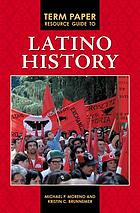 Term Paper Resource Guide to Latino History
by
Term Paper Resource Guide to Latino History
by
Suggested resources from the GRC Latine Caucus
Gómez-Quiñones, J., & Morris, I. V. (2005). Chicano Movement. In M. C. Horowitz (Ed.), New Dictionary of the History of Ideas (Vol. 1, pp. 305-309). Charles Scribner's Sons.
Holman Library. (2022, September). Latinx heritage focus: The Chicano movement [Illustration]. Latinx Studies. https://libguides.greenriver.edu/Latinxstudies
Kovalchek, F. (2021, August). Street art at Chicano Park, Barrio Logan, San Diego [Photograph]. Flickr. https://flic.kr/p/2mUKunu
Seattle Civil Rights & Labor History Project (n.d.). The creation of a community. El Centro de la Raza,1-2. http://depts.washington.edu/civilr/images/mecha/ docs/pdfs/elcentro.pdf
Telles, E. E. & Ortiz, V.. (2008). Generations of Exclusion : Mexican-Americans, Assimilation, and Race. Russell Sage Foundation.
 For Brown Girls with Sharp Edges and Tender Hearts
by
"For generations, women of color have had to push against powerful forces of sexism, racism, and classism in this country, and too often, they have felt that they had to face these challenges alone. Through her writing, her activism, and through founding Latina Rebels, Prisca Dorcas Mojica Rodríguez fought to create community to help women fight together. Now her new book For Brown Girls with Sharp Edges and Tender Hearts offers wisdom and a liberating path forward for all fellow Brown girls. Her new book addresses a range of issues: How can Brown girls survive, and thrive, in spaces that were never meant for us? How do we feel pride when we're forced to code-switch? How can we deal with our own imposter syndrome? How do we free ourselves from internalized racism, when it comes to colorism within our communities? And what does it mean to decolonize our worldview? Chapter by chapter, Mojica Rodríguez not only defines these terms, she crafts powerful new ways to address these challenges. She defies "universal" white narratives by telling her own stories. She gives readers access to the knowledge that changed her life and powered her activism. Too often Brown girls have had to strive and climb and force themselves into predominantly white spaces that were never built for them. Here Mojica Rodríguez crafts a love letter and a manifesto to Brown girls, guiding them toward women who have innovated a sense of pride and sisterhood when the dominant community has failed them. In the end, this timely and urgent book energizes a movement with essential tools to help women speak up and make change. May it spark a fire within you."-- Provided by publisher.
For Brown Girls with Sharp Edges and Tender Hearts
by
"For generations, women of color have had to push against powerful forces of sexism, racism, and classism in this country, and too often, they have felt that they had to face these challenges alone. Through her writing, her activism, and through founding Latina Rebels, Prisca Dorcas Mojica Rodríguez fought to create community to help women fight together. Now her new book For Brown Girls with Sharp Edges and Tender Hearts offers wisdom and a liberating path forward for all fellow Brown girls. Her new book addresses a range of issues: How can Brown girls survive, and thrive, in spaces that were never meant for us? How do we feel pride when we're forced to code-switch? How can we deal with our own imposter syndrome? How do we free ourselves from internalized racism, when it comes to colorism within our communities? And what does it mean to decolonize our worldview? Chapter by chapter, Mojica Rodríguez not only defines these terms, she crafts powerful new ways to address these challenges. She defies "universal" white narratives by telling her own stories. She gives readers access to the knowledge that changed her life and powered her activism. Too often Brown girls have had to strive and climb and force themselves into predominantly white spaces that were never built for them. Here Mojica Rodríguez crafts a love letter and a manifesto to Brown girls, guiding them toward women who have innovated a sense of pride and sisterhood when the dominant community has failed them. In the end, this timely and urgent book energizes a movement with essential tools to help women speak up and make change. May it spark a fire within you."-- Provided by publisher.
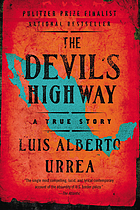 The Devil's Highway: a True Story
by
A widely-praised piece of investigative reporting examining the journey of 26 men who in May 2001 attempted to cross the Mexican border into the desert of Southern Arizona through the region known as the Devil's Highway. So harsh and desolate that even the Border Patrol is afraid to travel through it, the Highway has claimed the lives of countless men and women - in May 2001 it claimed 14 more. History of high acclaim from the author of The Hummingbird's Daughter.
I Am Not Your Perfect Mexican Daughter
by
The Devil's Highway: a True Story
by
A widely-praised piece of investigative reporting examining the journey of 26 men who in May 2001 attempted to cross the Mexican border into the desert of Southern Arizona through the region known as the Devil's Highway. So harsh and desolate that even the Border Patrol is afraid to travel through it, the Highway has claimed the lives of countless men and women - in May 2001 it claimed 14 more. History of high acclaim from the author of The Hummingbird's Daughter.
I Am Not Your Perfect Mexican Daughter
by
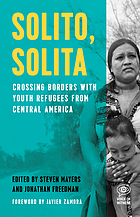 Solito, Solita: crossing borders with youth refugees from Central America
by
They are a mass migration of thousands, yet each one travels alone. Solito, Solita (Alone, Alone), shortlisted for the 2019 Juan E. Méndez Book Award for Human Rights in Latin America, is an urgent collection of oral histories that tells--in their own words--the story of young refugees fleeing countries in Central America and traveling for hundreds of miles to seek safety and protection in the United States. Fifteen narrators describe why they fled their homes, what happened on their dangerous journeys through Mexico, how they crossed the borders, and for some, their ongoing struggles to survive in the United States. In an era of fear, xenophobia, and outright lies, these stories amplify the compelling voices of migrant youth. What can they teach us about abuse and abandonment, bravery and resilience, hypocrisy and hope? They bring us into their hearts and onto streets filled with the lure of freedom and fraught with violence. From fending off kidnappers with knives and being locked in freezing holding cells to tearful reunions with parents, Solito, Solita's narrators bring to light the experiences of young people struggling for a better life across the border. This collection includes the story of Adrián, from Guatemala City, whose mother was shot to death before his eyes. He refused to join a gang, rode across Mexico atop cargo trains, crossed the US border as a minor, and was handcuffed and thrown into ICE detention on his eighteenth birthday. We hear the story of Rosa, a Salvadoran mother fighting to save her life as well as her daughter's after death squads threatened her family. Together they trekked through the jungles on the border between Guatemala and Mexico, where masked men assaulted them. We also meet Gabriel, who after surviving sexual abuse starting at the age of eight fled to the United States, and through study, legal support and work, is now attending UC Berkeley.
Solito, Solita: crossing borders with youth refugees from Central America
by
They are a mass migration of thousands, yet each one travels alone. Solito, Solita (Alone, Alone), shortlisted for the 2019 Juan E. Méndez Book Award for Human Rights in Latin America, is an urgent collection of oral histories that tells--in their own words--the story of young refugees fleeing countries in Central America and traveling for hundreds of miles to seek safety and protection in the United States. Fifteen narrators describe why they fled their homes, what happened on their dangerous journeys through Mexico, how they crossed the borders, and for some, their ongoing struggles to survive in the United States. In an era of fear, xenophobia, and outright lies, these stories amplify the compelling voices of migrant youth. What can they teach us about abuse and abandonment, bravery and resilience, hypocrisy and hope? They bring us into their hearts and onto streets filled with the lure of freedom and fraught with violence. From fending off kidnappers with knives and being locked in freezing holding cells to tearful reunions with parents, Solito, Solita's narrators bring to light the experiences of young people struggling for a better life across the border. This collection includes the story of Adrián, from Guatemala City, whose mother was shot to death before his eyes. He refused to join a gang, rode across Mexico atop cargo trains, crossed the US border as a minor, and was handcuffed and thrown into ICE detention on his eighteenth birthday. We hear the story of Rosa, a Salvadoran mother fighting to save her life as well as her daughter's after death squads threatened her family. Together they trekked through the jungles on the border between Guatemala and Mexico, where masked men assaulted them. We also meet Gabriel, who after surviving sexual abuse starting at the age of eight fled to the United States, and through study, legal support and work, is now attending UC Berkeley.
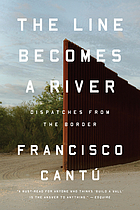 The Line Becomes a River: dispatches from the border
by
The instant New York Times bestseller, "A must-read for anyone who thinks 'build a wall' is the answer to anything." --Esquire For Francisco Cantú, the border is in the blood: his mother, a park ranger and daughter of a Mexican immigrant, raised him in the scrublands of the Southwest. Haunted by the landscape of his youth, Cantú joins the Border Patrol. He and his partners are posted to remote regions crisscrossed by drug routes and smuggling corridors, where they learn to track other humans under blistering sun and through frigid nights. They haul in the dead and deliver to detention those they find alive. Cantú tries not to think where the stories go from there. Plagued by nightmares, he abandons the Patrol for civilian life. But when an immigrant friend travels to Mexico to visit his dying mother and does not return, Cantú discovers that the border has migrated with him, and now he must know the whole story. Searing and unforgettable, The Line Becomes a River goes behind the headlines, making urgent and personal the violence our border wreaks on both sides of the line
The Turning Pointe
by
The Line Becomes a River: dispatches from the border
by
The instant New York Times bestseller, "A must-read for anyone who thinks 'build a wall' is the answer to anything." --Esquire For Francisco Cantú, the border is in the blood: his mother, a park ranger and daughter of a Mexican immigrant, raised him in the scrublands of the Southwest. Haunted by the landscape of his youth, Cantú joins the Border Patrol. He and his partners are posted to remote regions crisscrossed by drug routes and smuggling corridors, where they learn to track other humans under blistering sun and through frigid nights. They haul in the dead and deliver to detention those they find alive. Cantú tries not to think where the stories go from there. Plagued by nightmares, he abandons the Patrol for civilian life. But when an immigrant friend travels to Mexico to visit his dying mother and does not return, Cantú discovers that the border has migrated with him, and now he must know the whole story. Searing and unforgettable, The Line Becomes a River goes behind the headlines, making urgent and personal the violence our border wreaks on both sides of the line
The Turning Pointe
by
 The bronze screen : 100 years of the Latino image in Hollywood cinema
by
From silent movies to urban gang films, The Bronze screen examines the past, present, and future of Latinos in motion pictures, including the stereotypes of the Greaser, the Lazy Mexican, the Latin lover, and the Dark lady. Rare and extensive footage traces the progression of Latino performers from these distorted screen images to the increased prominence of today's Latino actors, writers, and directors.
The bronze screen : 100 years of the Latino image in Hollywood cinema
by
From silent movies to urban gang films, The Bronze screen examines the past, present, and future of Latinos in motion pictures, including the stereotypes of the Greaser, the Lazy Mexican, the Latin lover, and the Dark lady. Rare and extensive footage traces the progression of Latino performers from these distorted screen images to the increased prominence of today's Latino actors, writers, and directors.

