Listed below are just some of the well-known organizations working towards ending hunger. These websites often house up-to-date statistics and information on current food-related research.
Searching government and relevant organization websites can be a useful way to find credible information when searching Google. Consider the websites below.
Use the databases listed below to search for information on your topic. Remember to use simple keywords in your search, such as hunger or food insecurity.


Use the databases below to search for different information types such as articles from magazines, newspapers, and scholarly journals. For short, more popular articles you can limit to newspapers and magazines. For more scholarly research-based articles, limit to academic/scholarly journals.


 Food Insecurity: A Reference Handbook
by
Food Insecurity: A Reference Handbook
by
 Food Insecurity on Campus: Action and Intervention
by
Food Insecurity on Campus: Action and Intervention
by
 Reinventing Food Banks and Pantries: New Tools to End Hunger
by
Reinventing Food Banks and Pantries: New Tools to End Hunger
by
 The End of Plenty: The Race to Feed a Crowded World
by
The End of Plenty: The Race to Feed a Crowded World
by
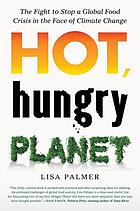 Hot, Hungry Planet: The Fight to Stop a Global Food Crisis in the Face of Climate Change
by
Hot, Hungry Planet: The Fight to Stop a Global Food Crisis in the Face of Climate Change
by
 Growing Up Empty : The Hunger Epidemic in America
by
Growing Up Empty : The Hunger Epidemic in America
by
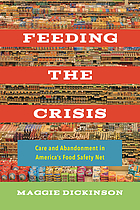 Feeding the Crisis: Care and Abandonment in America's Food Safety Net
by
"The Supplemental Nutrition Assistance Program (SNAP), formerly known as food stamps, is one of the most controversial forms of social welfare in the United States. Although it's commonly believed that such federal programs have been cut back since the 1980s, Maggie Dickinson charts the dramatic expansion and reformulation of the food safety net in the twenty-first century. Today, receiving SNAP benefits is often tied to work requirements, which essentially subsidizes low-wage jobs. Excluded populations--such as the unemployed, informally employed workers, and undocumented immigrants--must rely on charity to survive. Feeding the Crisis tells the story of eight families as they navigate the terrain of an expanding network of assistance programs in which care and abandonment work hand in hand to make access to food uncertain for people on the social and economic margins. Amid calls at the federal level to expand work requirements for food assistance, Dickinson shows us how such ideas are bad policy that fail to adequately address hunger in America. Feeding the Crisis brings the voices of food-insecure families into national debates about welfare policy, offering fresh insights into how we can establish a right to food in the United States."
Feeding the Crisis: Care and Abandonment in America's Food Safety Net
by
"The Supplemental Nutrition Assistance Program (SNAP), formerly known as food stamps, is one of the most controversial forms of social welfare in the United States. Although it's commonly believed that such federal programs have been cut back since the 1980s, Maggie Dickinson charts the dramatic expansion and reformulation of the food safety net in the twenty-first century. Today, receiving SNAP benefits is often tied to work requirements, which essentially subsidizes low-wage jobs. Excluded populations--such as the unemployed, informally employed workers, and undocumented immigrants--must rely on charity to survive. Feeding the Crisis tells the story of eight families as they navigate the terrain of an expanding network of assistance programs in which care and abandonment work hand in hand to make access to food uncertain for people on the social and economic margins. Amid calls at the federal level to expand work requirements for food assistance, Dickinson shows us how such ideas are bad policy that fail to adequately address hunger in America. Feeding the Crisis brings the voices of food-insecure families into national debates about welfare policy, offering fresh insights into how we can establish a right to food in the United States."