ENGL 127 Research Writing: Social Sciences (Bahl)

Diversity, Equity, and Inclusion in Higher Education

Online reference sources

Find background information in library reference collections

Use the following online reference databases to look for starting resources on your topic. 

  • Search by keyword and then use limiters to hone in on the most relevant articles.
  • To find relevant CQ Researcher Reports, I also recommend using the Browse Topic feature.

Gale Virtual Reference Library (GVRL

How to find useful articles in GVRL: 
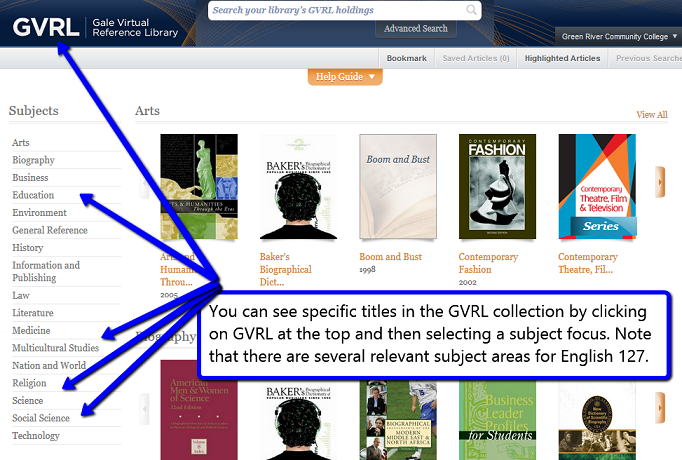
  1. Browse: Look for subjects and encyclopedias your topic is connected to.
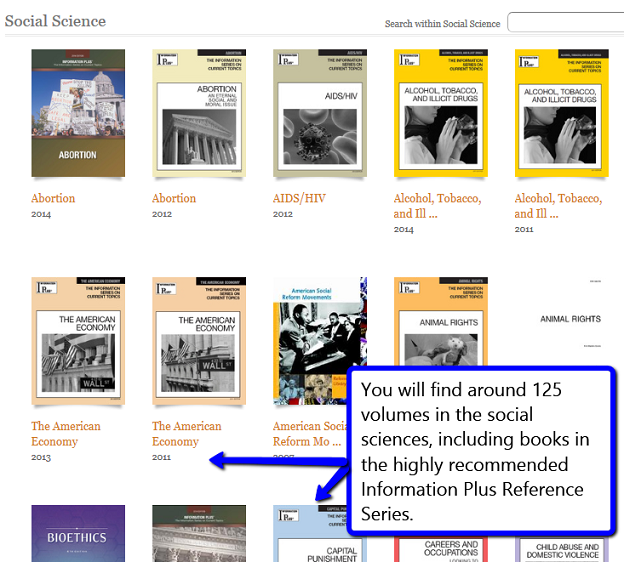
    • Click on GVRL in header and then limit by subject area on the left. Browse encyclopedia book covers and titles.
    • I recommend the Information Plus Reference Series for many social sciences topics. Be sure to check the date for currency, but they are an excellent source of statistical and other factual documentation.
  2. Search: Type in relevant search terms, or keywords, to find articles on your topic. 

See illustrations below:


Using Reference Sources

What do you do with a reference article, once you have one? The article below on Title IX illustrates why reference is a smart place to start a research project.

It provides key concepts and key search terms, discusses the issues associated with the topic, defines terms, gives a history of the legislation's passage and challenges to its continued existence, and leads to more sources. And it's brief. That's useful!

Click on image to enlarge. 

GVRL Title IX article that highlights some of the reasons reference sources are a useful place to start.

What's reference?

Why start with Reference?

Reference sources are a good starting place for researching a topic.

A reference collection is a set of books, databases, and other items that provide background information on a topic. A reference collection includes general sources such as dictionaries and encyclopedias. In college libraries, reference collections also include specialized encyclopedias such as the Encyclopedia of world crime : criminal justice, criminology, and law enforcement.

A reference database is also a great tool for helping identify subtopics and ways to narrow and focus a broad topic.

Reference articles:

  • Introduce the basic "who, what, when, where and why's" of your topic.
  • Give you a sense of the range of issues related to your topic.
  • Identify key names, dates, concepts and terminology of the topic.
  • Provide you with additional keywords you can use to search other resources for information on your topic.
  • Help you begin to narrow and focus, or broaden if necessary, your starting idea into a researchable topic.